

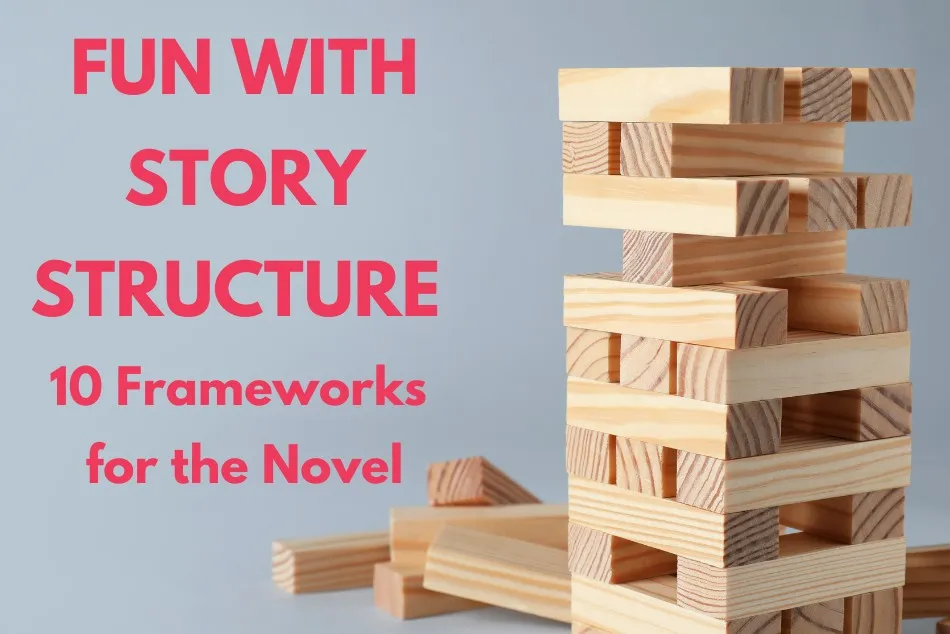
Structure is the underpinning of the novel, the pillars that support the narrative from beginning to end. Without a strong structure, your story can fall in on itself, like a Jenga puzzle in freefall. But that doesn’t mean structure has to be boring.
Here are 10 time-honored ways to play around with structure. Check out this list, and the examples provided. Revisit these stories in their various forms—and this time, take notes. It’s the kind of fun writerly homework that will help you kick-start your plots, enliven your characters, deepen your themes—and engage your readers.
1. Nonlinear intertwining timelines
Film: Memento
Print:
- Slaughterhouse Five, by Kurt Vonnegut
- The Time Traveler’s Wife, by Audrey Niffenegger
- Cloud Atlas, by David Mitchell
2. Subplots
Film: Pulp Fiction
Print:
- The Lord of the Rings, by J.R.R. Tolkien
- Pride and Prejudice, by Jane Austen
- Les Misérables, by Victor Hugo
- Little Fires Everywhere, by Celeste Ng
3. Bird by Bird
- If you haven’t read Anne Lamott’s Bird by Bird, do so now. Seriously.
Film: 27 Dresses
Print:
- The Jane Austen Book Club, by Karen Joy Fowler
- The Overstory, by Richard Powers
- Summer Sisters, by Judy Blume
- Twelve Patients, by Eric Manheimer, MD
4. A Thing/Place/Human Through Time
Film: The Red Violin, The Curious Case of Benjamin Button
Print:
- Accordion Crimes, by Annie Proulx
- The Women of Brewster Place, by Gloria Naylor
- North Woods, by Daniel Mason
- Horse, by Geraldine Brooks
5. Twists on Reincarnation
Film: Groundhog Day
Print:
- Life After Life, by Kate Atkinson
- A Dog’s Purpose, by W. Bruce Cameron
- Mariana, by Susanna Kearsley
6) One-Day Timeframe
TV: 24 Hours
Print:
- Ulysses, by James Joyce
- Mrs. Dalloway, by Virginia Woolf
- Saturday, by Ian McEwan
- The Sun Is Also a Star, by Nicola Yoon
7) Book Within a Book
Film: American Fiction
Print:
- Don Quixote, by Miguel de Cervantes
- Erasure, by Percival Everett
- The Blind Assassin, by Margaret Atwood
- Magpie Murders, by Anthony Horowitz
8. Dual Timeline
Film: The Godfather, Part II
Print:
- Possession, by A.S. Byatt
- The Peter Fallon series, by William Martin
- The Stolen Book, by Evelyn Aubrey
9. Ensemble Cast
Film: Crash
Print:
- The Canterbury Tales, by Geoffrey Chaucer
- The Bridge of San Luis Rey, by Thornton Wilder
- A Song of Fire and Ice, by George R.R. Martin
10. Epistolary
Film: The Lunchbox
Print:
- The Screwtape Letters, by C.S. Lewis
- The Color Purple, by Alice Walker
- Letters from Africa, 1914 -1931, by Isak Dinesen
- The Appeal, by Janice Hallett
This post originally appeared on Career Authors