



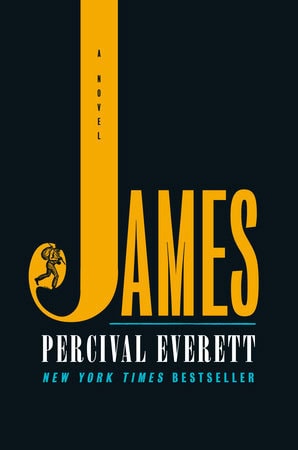
It’s that time of year again, when a number of classic novels, plays, poems, songs, films, and other works of art come into the public domain. This constitutes a veritable gold mine for writers. All kinds of modern retellings find their audience, from Percival Everett’s National Book Award-winning novel James, a brilliant reimagining of The Adventures of Huckleberry Finn, and Madeline Miller’s retelling of the Greek goddess of magic, Circe, to Amy Heckerling’s 1994 coming-of-age Beverly Hills version of Jane Austen’s Emma, Clueless, and Empire, the hip-hop family TV drama that creators Lee Daniels and Danny Strong based on Shakespeare’s King Lear.
So popular are retellings these days that as an agent, whenever I can pitch a story as “a modern retelling of [insert classic here],” I do just that. Works based on or inspired by classics that have stood the test of time with readers and viewers have a built-in appeal; when writers capitalize on that appeal to create a high-concept story, agents, editors, and readers will line up to read it. In fact, I recently had an acquisitions editor tell me that he was “only considering submissions that he could pitch as ‘a modern retelling’” to his publishing board.
Brainstorming Retellings
You, too, can write a high-concept story based on or inspired by a timeless classic. Here are some ways to think about new twists on old tales:
Era
Take a public-domain work and change its time period to another time period. Think of the aforementioned Clueless or Rick Riordan’s bestselling Percy Jackson and the Olympians series or the innumerable modern-day versions of Sherlock Holmes—Steven Moffat and Mark Gatiss’s sensational Sherlock on the BBC, Joe Ide’s fabulous IQ PI novels, Brittany Cavallero’s young adult series Charlotte Holmes, Charlotte being the famous detective’s great-great-great-granddaughter—just to name a few.
Setting
Transport Romeo and Juliet to New York City in the 1950s and you’ve got West Side Story. Transport Wuthering Heights to 1990s Massachusetts and you’ve got Alice Hoffman’s Here on Earth. Transport The Merchant of Venice to 21st century footballers’ Cheshire, and you’ve got Howard Jacobson’s Shylock Is My Name. You get the picture.
Genre
Switching up the genre is another way to reinvent a classic. Switch the ultimate comedy of manners Pride and Prejudice to the speculative genre, and voila: Pride and Prejudice and Vampires. Disney remade Hamlet into one of the best and most successful animated musicals of all time, The Lion King. Ahmed Saadawi’s Frankenstein in Baghdad moves from horror to dystopian science fiction as it reimagines the story in post-war Iraq. Perhaps the cheapest examples of this are the horror films based on iconic characters from public-domain works, like the slasher Mickey Mouse film The Mouse Trap or Winnie the Pooh: Blood and Honey, which was voted one of the worst movies of all time. Surprise, surprise.
Point of View
Gregory Maguire has made a career of creating new stories by writing old stories from a different point of view, most famously in Wicked. In the young adult novel One for All, Lillie Lainoff pens a feminist retelling of The Three Musketeers. And the aforementioned James is a retelling of The Adventures of Huckleberry Finn from Jim’s POV. There are countless examples of this perspective-changing approach.
Homage
How faithful you are to the original work is up to you. Even a relatively slim connection to a classic can help you sell your book. My talented client Susan Breen wrote a wonderful contemporary novel called Merry, in which a woman who may be facing her last Christmas sells her prized signed edition of A Christmas Carol to finance a last-chance trip to London for her estranged family, and finds herself confronted by the ghost of Dickens himself, which I pitched as Emma Straub meets The Man Who Invented Christmas with a dash of It’s a Wonderful Life. Merry sold at auction, and will debut next Christmas from Alcove Press. And The Night Woods, book six in my Mercy Carr mystery series, is my humble homage to The Odyssey.
What’s Coming into the Public Domain This Year
Here’s a sampling of the works coming into the public domain in 2025:
- The Sound and the Fury, by William Faulkner
- A Farewell to Arms, by Ernest Hemingway
- A Room of One’s Own, by Virginia Woolf
- The Man Within, by Graham Greene
- Cup of Gold, by John Steinbeck
- Blackmail, directed by Alfred Hitchcock
- The Black Watch, directed by John Ford
- Dynamite, directed by Cecil B. DeMille
- Popeye, in Gobs of Work from the Thimble Theatre comic strip by E. C. Segar
- Singin’ in the Rain, lyrics by Arthur Freed, music by Nacio Herb Brown
- Red Harvestand The Maltese Falcon (as serialized in Black Mask magazine), by Dashiell Hammett
- A High Wind in Jamaica, by Richard Hughes
- Laughing Boy: A Navajo Love Story, by Oliver La Farge
- Rope, by Patrick Hamilton
- Arthur Wesley Wheen’s first English translation of All Quiet on the Western Front, by Erich Maria Remarque
- TheSeven Dials Mystery, by Agatha Christie
- Good-bye to All That, by Robert Graves
- Is Sex Necessary? Or, Why You Feel the Way You Do, by E. B. White and James Thurber
- Letters to a Young Poet (in the original German, Briefe an einen jungen Dichter), by Rainer Maria Rilke
- A Preface to Morals, by Walter Lippmann
- The Roman Hat Mystery, by Ellery Queen
- The Last September, by Elizabeth Bowen
- Animula, by T.S. Eliot
- Dear Judas and Other Poems, by Robinson Jeffers
- Dark Summer, by Louise Bogan
This is just a partial list. When it comes to public domain works, the past is your writer’s playground—and maybe your path to a high-concept modern retelling that can break out in today’s tough marketplace.
Time to play!
This post originally appeared at Career Authors.